
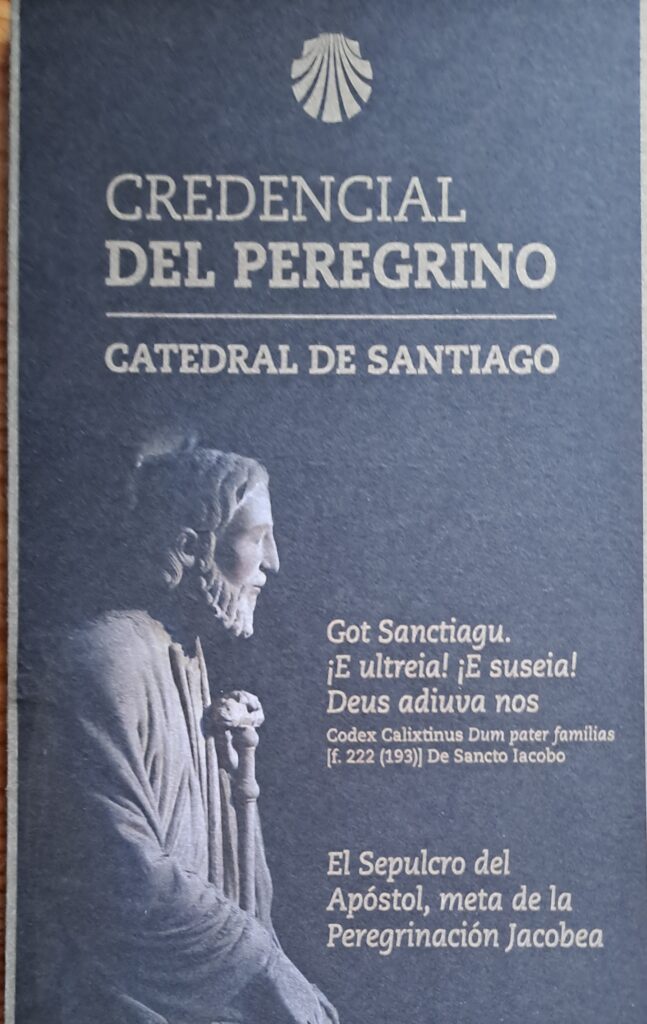
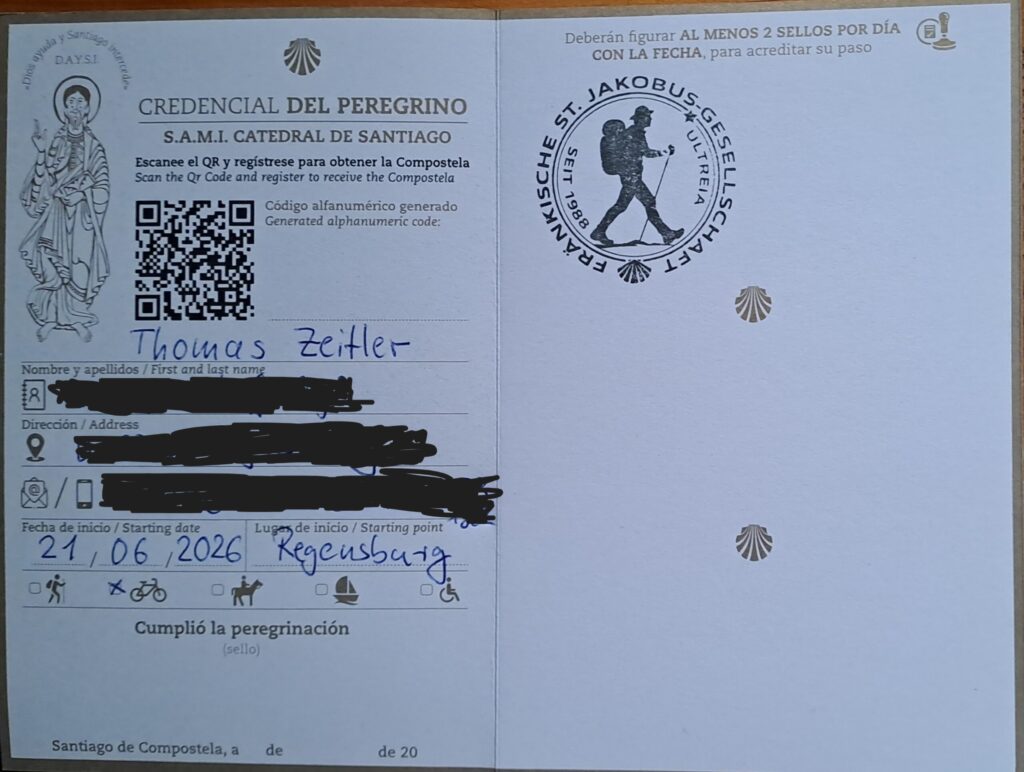
I ordered a pilgrim passport from the Franconian Confraternity of St. James, and it arrived promptly. They only ask for a donation so that they can maintain this service.
During a short bike ride in the Stiftland in early May, I passed by the church in Marchaney, which is the starting point for every pilgrim from the Stiftland region.
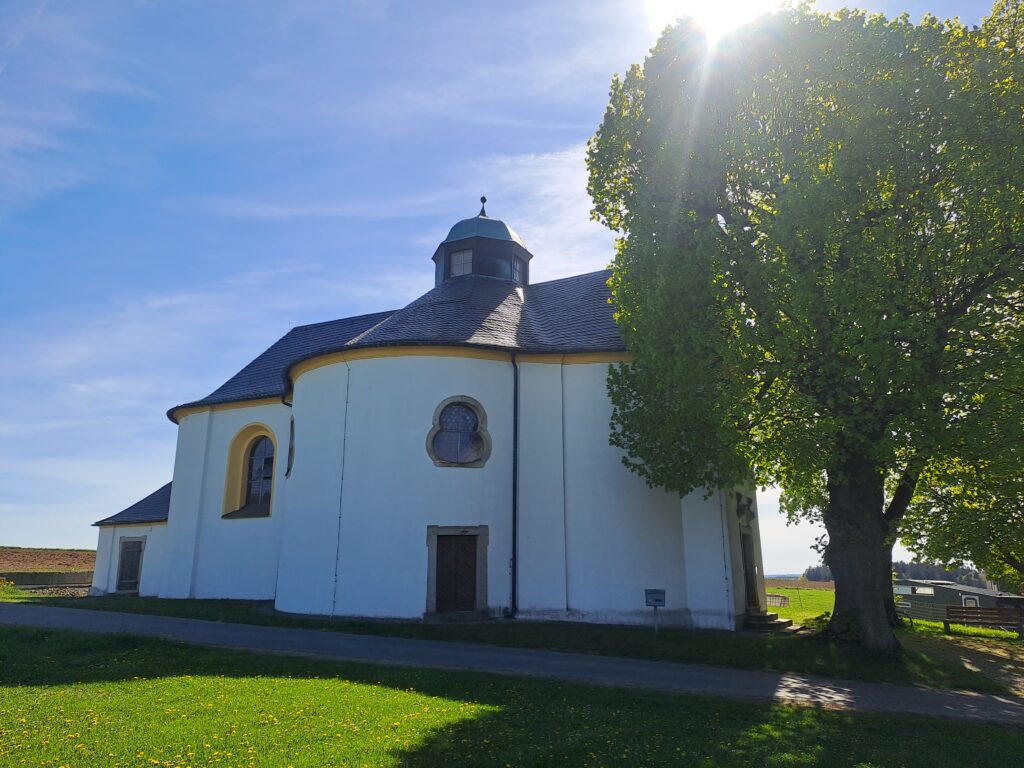
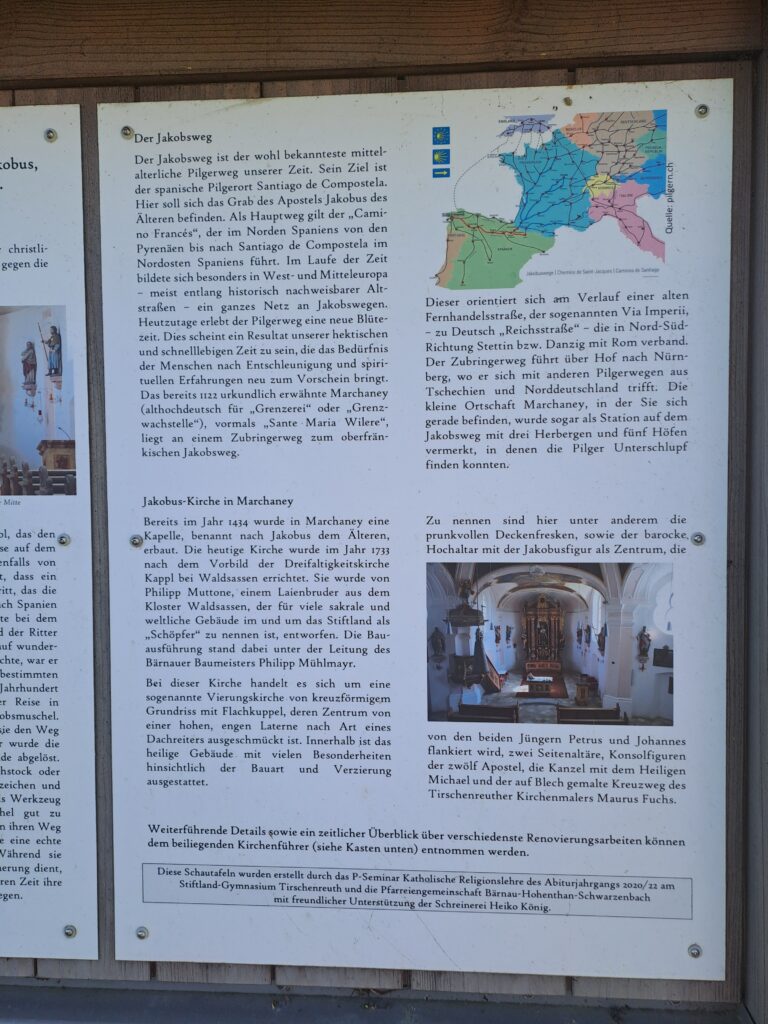
"In my childhood days, the pilgrimage to the Steinberg for the Bergfest (mountain festival) on the second weekend of July was an annual fixture on the calendar. Following the town fire of 1685, the citizens of Bärnau had vowed to make a pilgrimage to Heiligen near Tachau. However, the Austrian Emperor banned cross-border pilgrimages at the end of the 18th century, which is why the pilgrimage was promptly relocated to the Church of the Scourged Savior on the Steinberg
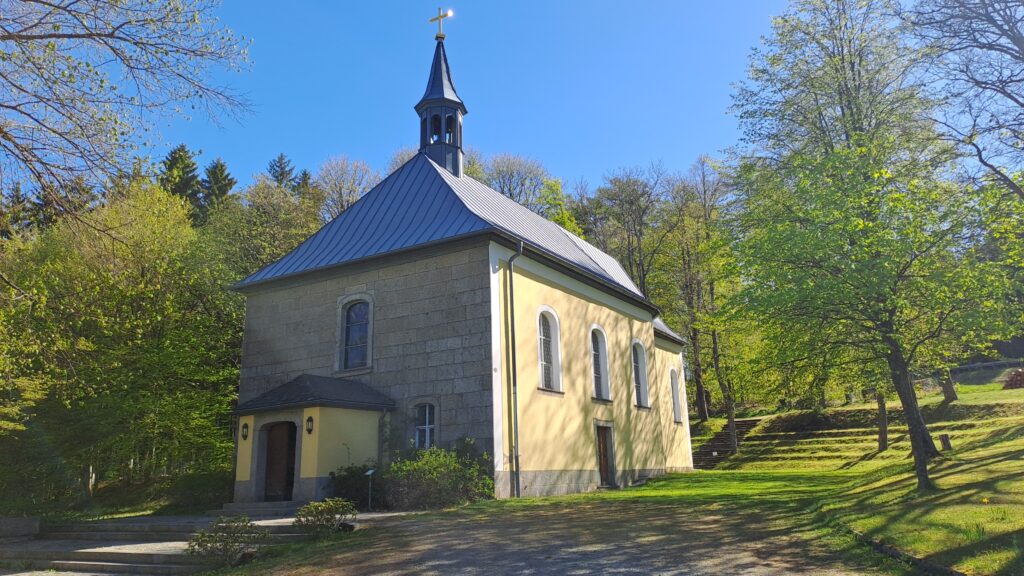
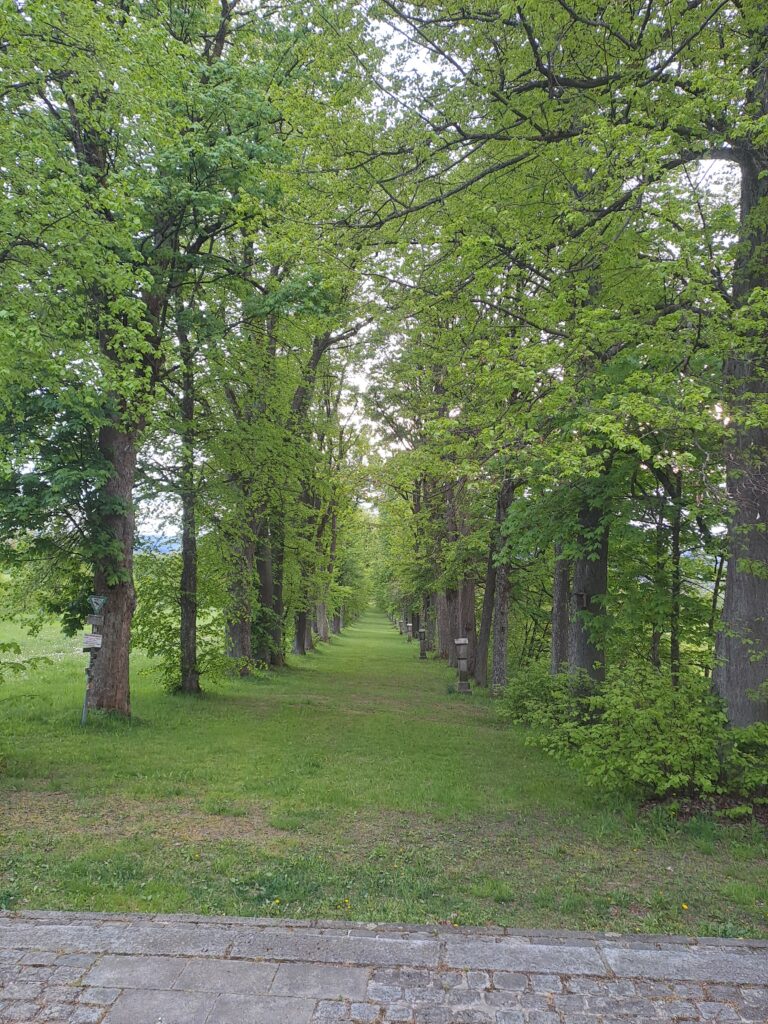
My wife and I also chose this very church as our wedding church. As a wedding party, we were able to 'pilgrimage up' the path through an avenue of beech trees that lines a Stations of the Cross.
Why do people go on pilgrimages? Who is a pilgrim? The definition states that they are people who visit a distant place for reasons of faith. What is their motivation?
- To see a longed-for destination
- To take a break from routine
- To connect with oneself
- Find Purpose
- Coping with a crisis
- To trigger a decision
- To let one's mind wander to distant places
- To start a new chapter in life
- ....
In the Middle Ages, people went on pilgrimages to cleanse themselves of their sins and to end up on the right side in the afterlife. Main destinations were Rome, Jerusalem, and Santiago de Compostela.
In all world religions, believers undertake physical journeys to holy sites to do penance, pray for divine blessing, or find inner reflection. Every Muslim is also encouraged to undertake a pilgrimage to Mecca once in their life – the Hajj. In Buddhism, pilgrimages serve to bring one closer to the life and work of Siddhartha Gautama (the Buddha). The four most important sites are located in India and Nepal: Lumbini (birth), Bodhgaya (enlightenment), Sarnath (first sermon), and Kushinagar (entry into Nirvana). In Hinduism, believers seek out holy places to attain liberation (Moksha) and to reduce karma. Destinations are often holy rivers (especially the Ganges) or cities like Varanasi (Benares), which are considered the dwelling place of the gods. Jews made their way to the Temple Mount and the Western Wall in Jerusalem.
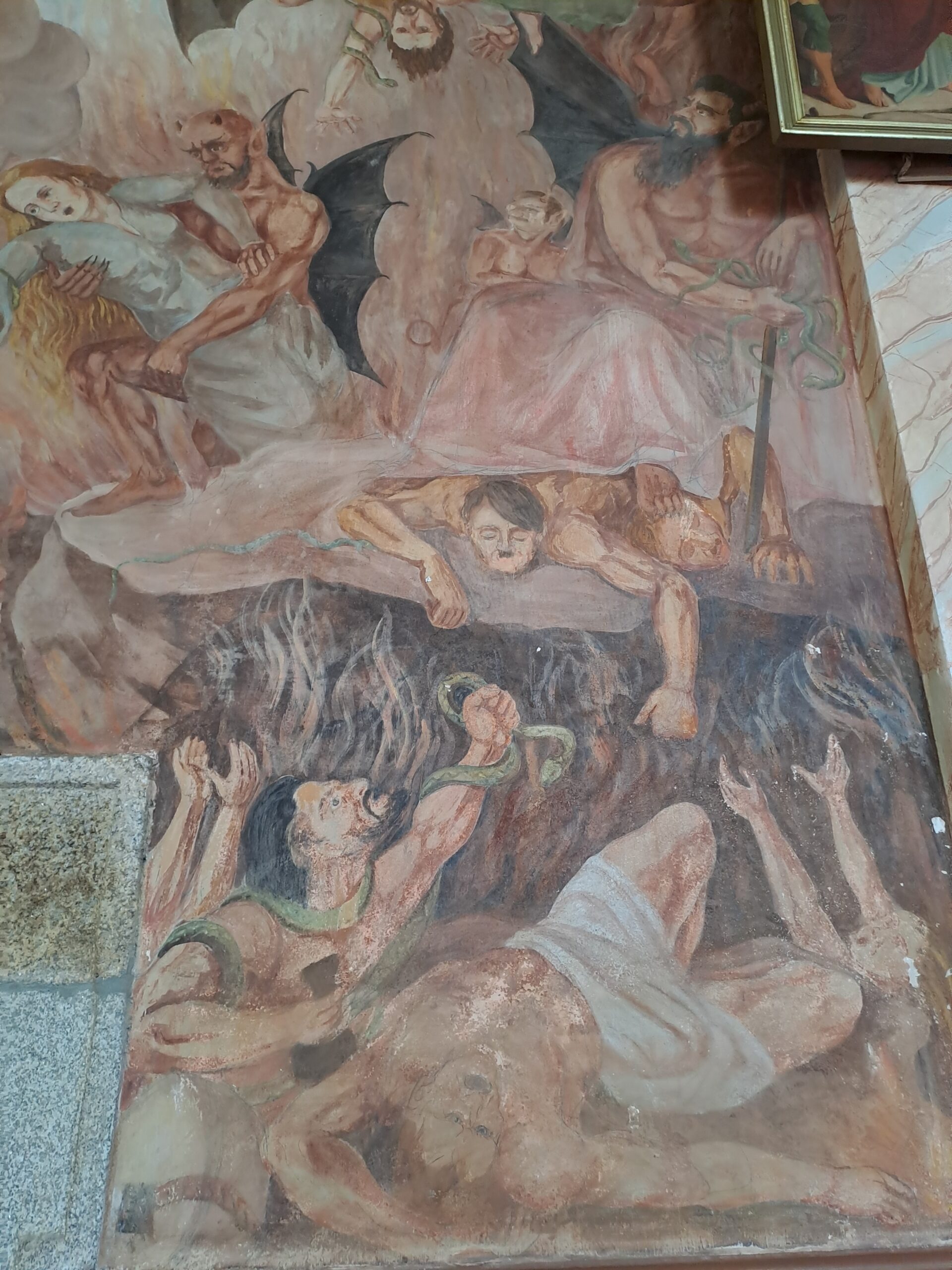
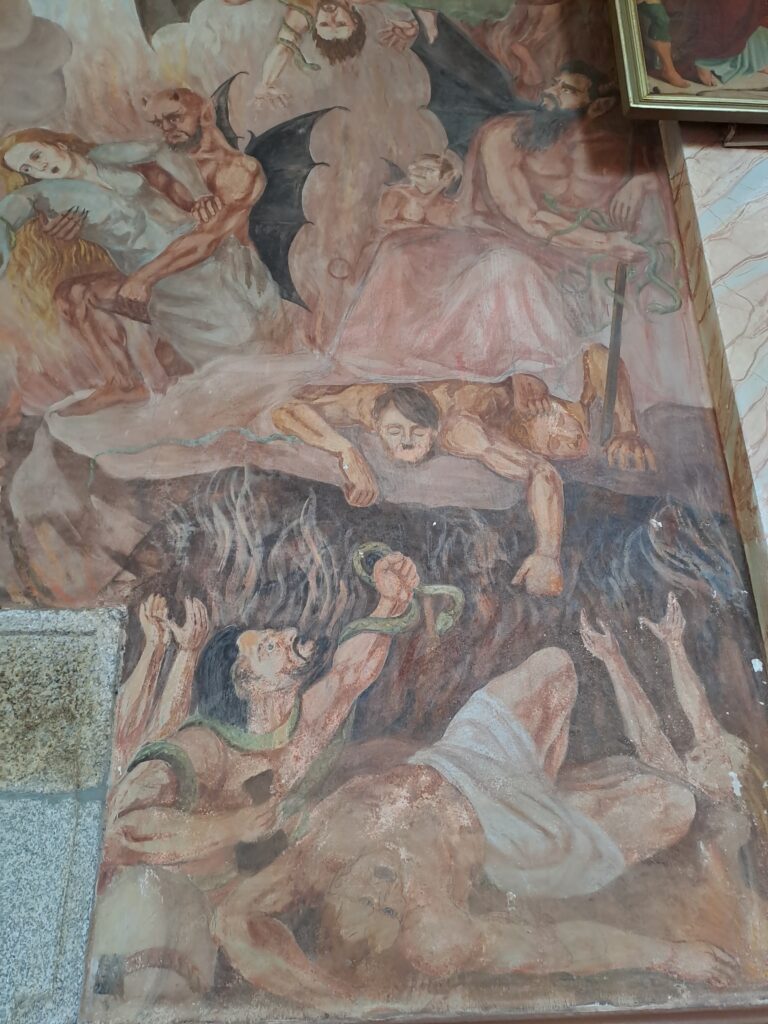
Dante Alighieri, in his Divine Comedy, describes the concepts of Heaven, Hell, and Purgatory from the late Middle Ages/early Renaissance. We have been reading these texts for about a year in our Italian class with Roberto Manzotta. Dante recounts how, during his temporary journey into the afterlife, he encounters various contemporaries in Hell, whose behaviour during their lives involved excessive crimes and transgressions. I have since worked my way up to becoming an expert on depictions of Hell. I found one of these in the church in Stein, in the district of Tirschenreuth.
The famous depiction of hell in the church of St. Laurentius in Stein is by the East Prussian painter Oskar Tytlik. He created the expressionist painting of the Last Judgement in 1947. He had been stranded in the small village while fleeing from East Prussia and earned his living by restoring the church and re-depicting heaven and hell.
In it, he processes the horrors of the Second World War: Hitler, Himmler, Göring and Stalin find their place in hell. The painter himself appears in it, as does a beloved girl from the village, whom he places in heaven – her children still recognise their mother in her – that's what the church verger told me. In Italian class, we had already discussed who should be placed in hell given the current political situation – there are certainly various geopolitical actors and warmongers in the world – perhaps I would then meet them on the pilgrimage to Santiago, if they were seeking forgiveness for their sins – but it is very unlikely that they would come to this realisation and also have enough fear of the consequences for their crimes.
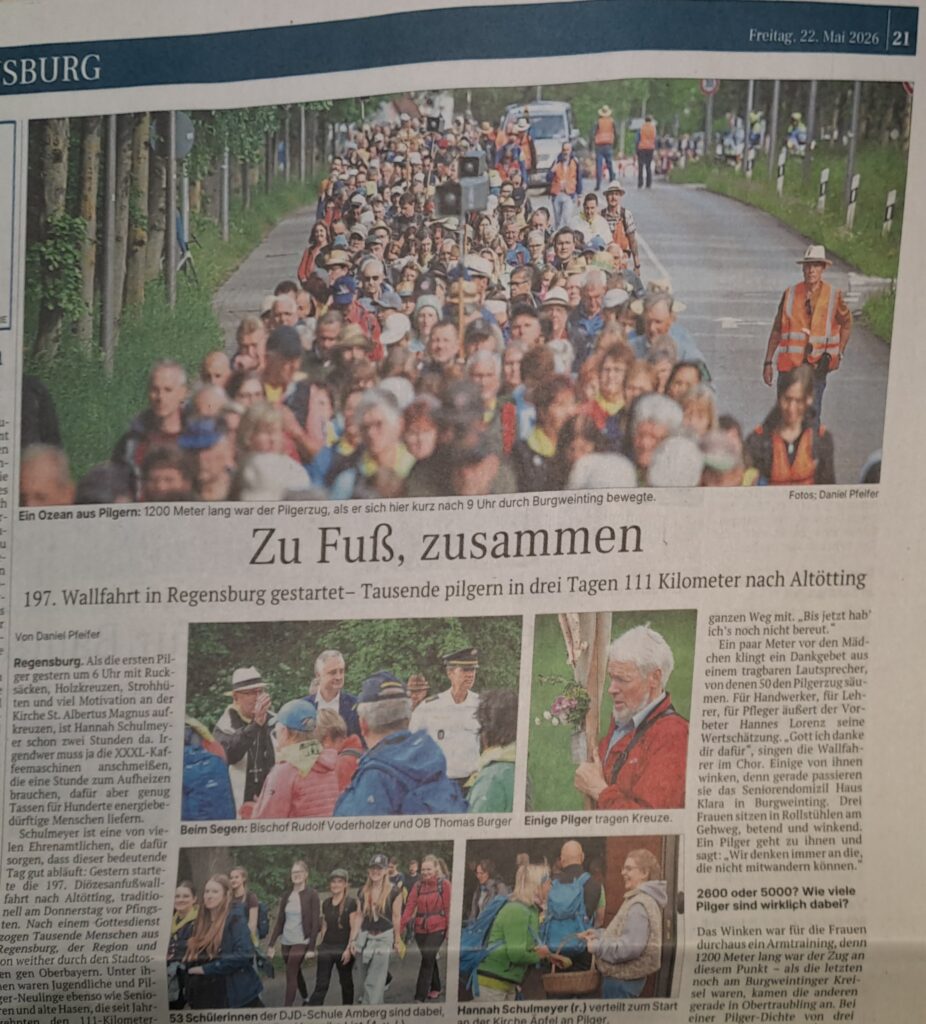
Yesterday, over 2000 pilgrims passed me on their way to Altötting.
Altötting is Germany's most famous Marian pilgrimage site. Its status as a pilgrimage centre dates significantly back to 1489, when the miraculous rescue of a drowned child gave rise to the pilgrimage. Its appeal is based on historical, spiritual, and cultural core factors:
- The Miracle of 1489: A three-year-old boy fell into the Mörnbach and was presumed dead. After his desperate mother prayed to Our Lady, the child is said to have reappeared alive.
- The „Black Madonna“: The spiritual centre is the Chapel of Grace on Kapellplatz, which houses a centuries-old statue of Mary, blackened by candle soot.
- Bavarian National Shrine For centuries, the Wittelsbach Dukes and Kings promoted the town. Significant rulers had their hearts buried there.
- Modern meaning: Papst Benedikt XVI. bezeichnete den Ort als das „Herz Bayerns“. Auch in der heutigen Zeit lockt das „Herz Europas“ jährlich Hunderttausende Pilger an, die auf der Suche nach Heilung und geistlicher Erneuerung sind.
I'm going to Rome next week – the parish trip, led by churchwarden Robert Lerchenberger, has been billed as a „pilgrimage“. Perhaps then I'll understand what my motivation is, apart from my longing for adventure 😉